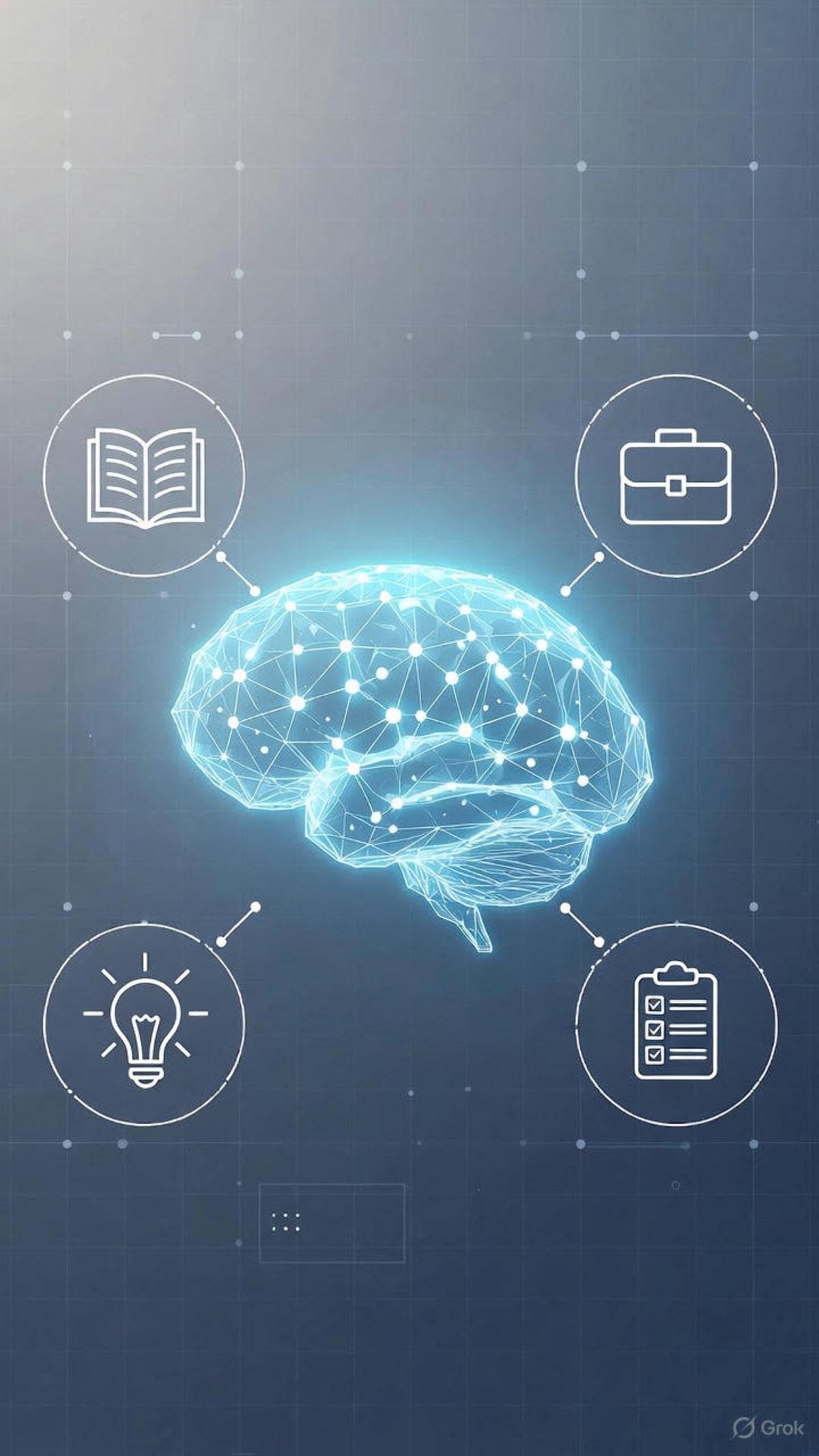
Introduction: AI Is No Longer Just for Tech Experts
Artificial Intelligence (AI) has moved far beyond research labs and tech companies. Today, AI tools are part of everyday life powering search engines, smartphones, writing assistants, design tools and business software. As a result, learning AI is no longer limited to programmers or engineers.
For non-technical learners, the question is no longer “Should I learn AI?” but rather “Which areas of AI should I focus on and where can I learn for free?” This guide answers both questions, offering a beginner-friendly roadmap and trusted free resources.
AI Literacy: The Foundation for Non-Tech Learners
AI literacy is the most important starting point for anyone without a technical background. It focuses on understanding what AI is, how it works conceptually and how it is used in real-world applications without requiring coding or advanced mathematics.
Through AI literacy, learners understand key ideas such as machine learning, generative AI, automation and data-driven decision-making. This knowledge helps users evaluate AI outputs critically and avoid common misconceptions.
A well-known introduction is IBM’s AI learning material, which explains AI concepts in simple language: IBM Artificial Intelligence Basics .
Prompt Engineering: A High-Value AI Skill
Prompt engineering is the skill of communicating effectively with AI systems using natural language. Since modern AI tools respond directly to user instructions, learning how to structure prompts has become one of the most valuable AI skills for non-technical users.
With good prompt engineering skills, learners can generate content, summarize reports, analyze ideas, brainstorm solutions, and improve productivity without any programming knowledge.
A widely referenced resource for learning prompt techniques is the Prompt Engineering Guide: https://www.promptingguide.ai/ .
Using AI for Productivity and Everyday Work
One of the most practical ways non-tech learners benefit from AI is through productivity tools. AI-powered assistants help users write emails, draft documents, summarize meetings, organize tasks and manage time more efficiently.
Instead of replacing jobs, AI increasingly works as a digital assistant that enhances human capability. This makes AI especially useful for students, office workers, freelancers and entrepreneurs.
Google provides accessible learning materials on how AI tools are used across industries: Google AI Education .
AI for Business, Entrepreneurship and Decision-Making
AI adoption is rapidly increasing in business environments. From marketing automation and customer support to data analysis and forecasting, AI helps organizations make faster and better decisions.
Non-technical professionals do not need to build AI systems to benefit from them. Understanding how Artificial Intelligence supports business processes allows managers and entrepreneurs to apply AI strategically and responsibly.
Microsoft provides beginner-friendly resources focused on business applications of AI: Microsoft AI Learning .
No-Code and Low-Code AI Tools
No-code and low code platforms are removing traditional barriers to AI adoption. These tools allow users to build chat-bots, automate workflows and integrate AI features using visual interfaces rather than programming languages.
This approach empowers non-tech users to experiment, innovate and deploy Artificial Intelligence solutions quickly and affordably, especially in small businesses and startups.
AI Learning Resources and PDFs
Many respected institutions provide free AI learning resources suitable for beginners. These materials focus on understanding and application rather than technical development.
Some trusted sources include:
- AI for Everyone by Andrew Ng –> a non-technical introduction to AI concepts.
- UNESCO AI Ethics Framework –> focuses on responsible and ethical AI use.
- IBM Think AI Hub -> practical AI explanations and use cases.
Common Mistakes Non-Tech Learners Should Avoid
A common mistake beginners make is starting with advanced programming, complex mathematics, or deep learning theory. While these topics are essential for AI engineers, they are not required to use AI effectively.
Non-technical learners progress faster when they focus on understanding AI concepts, learning how to interact with AI tools, and applying AI to real-world problems.
Conclusion: AI Skills Are for Everyone
Artificial Intelligence is no longer a niche technical field it is a universal tool shaping how we work, learn, and create. For non-technical learners, mastering AI literacy, prompt engineering, and practical applications is far more valuable than learning to code.
With free, high-quality resources readily available, anyone can begin their AI journey today. The future belongs to those who understand how to use AI thoughtfully, ethically, and effectively.