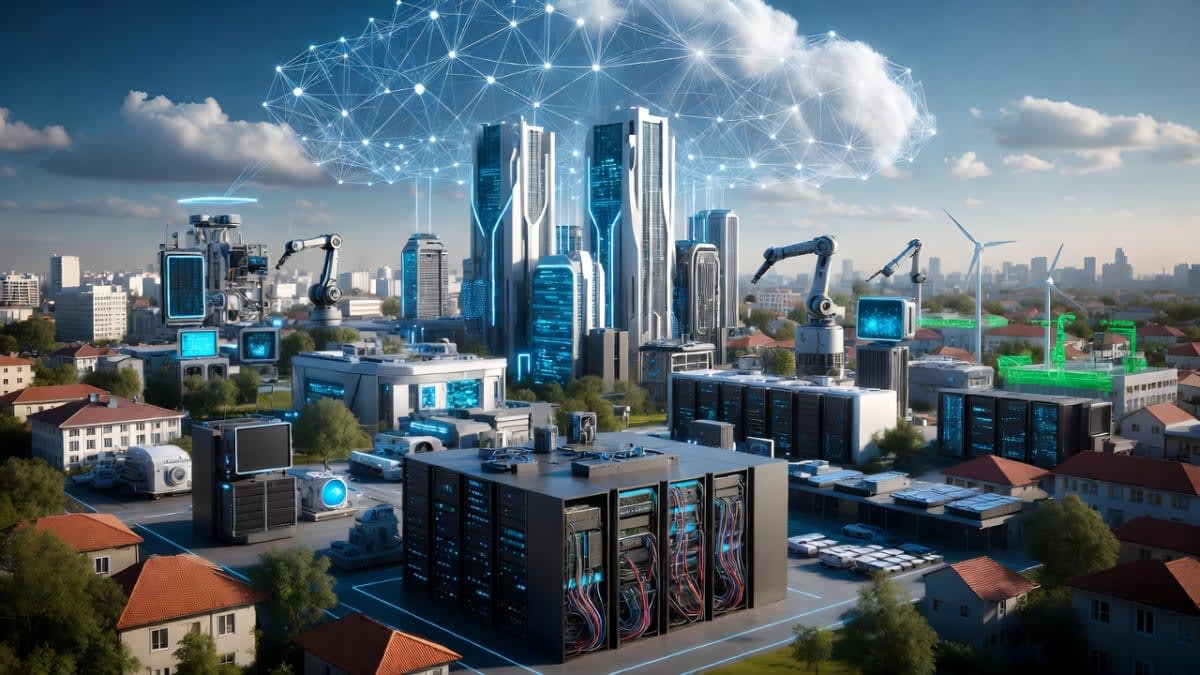
Cloud Computing and Its Future: Exploring the Impact and Future Prospects
Cloud computing has become the backbone of modern digital infrastructure, transforming how we store, process, and access data. At its core, it involves delivering computing services like servers, storage, databases, networking, software, and analytics over the internet, often referred to as "the cloud." This shift away from traditional on-premises hardware began gaining traction in the early 2000s with pioneers like Amazon Web Services (AWS), and today, it's integral to everything from streaming movies to running global enterprises. In this article, we'll delve into the profound impact cloud computing has had on businesses, the economy, and society, backed by real-world examples. Then, we'll look ahead to its future, highlighting emerging trends and potential challenges. As we stand in 2026, with AI and edge technologies reshaping the landscape, understanding these dynamics is crucial for students and professionals alike navigating this evolving field.
The Transformative Impact on Businesses
One of the most significant effects of cloud computing is its ability to enhance operational efficiency and agility for businesses. Companies no longer need to invest heavily in physical servers or IT infrastructure; instead, they can scale resources dynamically based on demand. This flexibility has revolutionized business operations by allowing rapid adaptation to market changes. For instance, during peak seasons, an e-commerce platform can ramp up server capacity without purchasing new hardware, avoiding over-provisioning and reducing waste. This scalability not only cuts costs but also speeds up innovation, as teams can experiment with new applications without the fear of sunk investments.
Economically, cloud computing has democratized access to advanced technology, leveling the playing field for small and medium-sized enterprises (SMEs). Previously, only large corporations could afford robust IT setups, but now, startups can leverage the same tools as giants like Google or Microsoft at a fraction of the cost. This has spurred economic growth by fostering entrepreneurship and job creation in tech sectors. According to industry insights, cloud adoption has led to significant value creation through cost reductions and improved productivity, with companies storing infrastructures remotely via the internet to streamline operations. On a broader scale, it contributes to GDP by enabling efficient resource allocation across industries.
From a societal perspective, cloud computing has bridged geographical divides, promoting remote work and global collaboration. The COVID-19 pandemic accelerated this trend, but its roots lie in cloud-enabled tools that allow seamless data sharing and communication. This has implications for work-life balance, urban decongestation, and even environmental benefits through reduced commuting. However, it also raises concerns about digital divides, where regions with poor internet access lag behind. Overall, the societal impact extends to education and healthcare, where cloud platforms make resources more accessible to underserved populations.
Real-Life Examples of Cloud Computing in Action
To illustrate these impacts, consider Netflix, a prime example of cloud computing's power in the entertainment industry. Netflix relies on AWS to handle massive data streams, scaling automatically to serve millions of users worldwide during binge-watching spikes. This not only ensures smooth playback but also allows for personalized recommendations powered by cloud-based machine learning algorithms. Without the cloud, managing such variability would require prohibitive infrastructure costs.
In healthcare, cloud computing has enabled telemedicine services, especially evident during global health crises. Platforms like Teladoc use cloud storage for patient records and video conferencing tools, allowing doctors to consult remotely. This has improved access in rural areas, reduced wait times, and lowered costs for both providers and patients. A specific case is the Mayo Clinic's adoption of cloud solutions to analyze vast datasets for research, accelerating discoveries in personalized medicine.
E-commerce giants like Amazon and Shopify exemplify cloud's role in retail. Amazon's own AWS powers its marketplace, handling everything from inventory management to payment processing. During events like Black Friday, the cloud absorbs traffic surges, preventing crashes that could cost millions in lost sales. For smaller businesses, Shopify's cloud-based platform simplifies setting up online stores, integrating with tools for marketing and analytics without needing in-house IT expertise.
In education, tools like Google Workspace (formerly G Suite) demonstrate cloud computing's collaborative potential. Students and teachers can work on shared documents in real-time, regardless of location. During remote learning periods, this ensured continuity, with features like Google Classroom storing assignments and feedback securely in the cloud. These examples show how cloud computing isn't just a technical upgrade; it's a catalyst for practical, everyday improvements across sectors.
Peering into the Future: Trends Shaping Cloud Computing
Looking ahead to the late 2020s, several trends are poised to define the future of cloud computing. One key development is the rise of hybrid and multi-cloud strategies, where organizations blend public clouds (like AWS or Azure) with private on-premises setups. This approach offers greater flexibility, security, and cost optimization, especially for sensitive data. By 2026, experts predict that most enterprises will adopt these models to avoid vendor lock-in and enhance resilience.
Artificial Intelligence (AI) integration is another powerhouse trend. Clouds are becoming AI-native, with platforms designed specifically for machine learning workloads. This includes private AI on private clouds to address data privacy concerns, as at least 15% of enterprises are expected to pursue this for compliance reasons. AI supercomputing platforms and multiagent systems will enable more sophisticated applications, from predictive analytics in finance to autonomous systems in manufacturing. However, this comes with challenges like rising energy costs for data centers, which could inflate cloud bills significantly.
Edge computing is gaining momentum, pushing processing closer to data sources to reduce latency. This is critical for IoT devices, autonomous vehicles, and real-time applications. Predictions suggest that by 2026, edge adoption will lead to 25% fewer cyberattacks due to decentralized architectures. Combined with 5G networks, it will support massive IoT expansions, transforming industries like logistics and smart cities.
Sustainability will also be a focal point. As data centers consume more power for AI and cloud operations, there's a push toward green computing. Trends include optimizing cloud environments for energy efficiency and adopting FinOps practices to manage costs amid rising bills. Moreover, confidential computing will enhance security by protecting data in use, addressing growing concerns over breaches and compliance.
Challenges on the Horizon
Despite these advancements, the future isn't without hurdles. Cloud outages remain a risk, with predictions of major disruptions due to AI data center upgrades. Integration complexities in hybrid setups can lead to inefficiencies, requiring skilled professionals to manage. Cybersecurity threats evolve alongside technology, necessitating robust measures like zero-trust architectures.
Additionally, the "slow feedback loop" in development environments is a bottleneck, pushing for production-like cloud dev setups by 2026. Economic pressures, such as higher operating costs from energy demands, could slow adoption in cost-sensitive regions. Professionals must stay ahead by upskilling in areas like cloud security and AI ethics to mitigate these issues.
Conclusion
Cloud computing has profoundly reshaped our world, driving efficiency, innovation, and connectivity across businesses, economies, and societies. Through examples like Netflix's scalable streaming and telemedicine's life-saving reach, its impact is tangible and far-reaching. As we move forward, trends like AI integration, edge computing, and sustainable practices promise even greater potential, though not without challenges like outages and rising costs. For students entering the field and professionals adapting to it, embracing continuous learning will be key. Ultimately, cloud computing's future lies in its ability to evolve responsibly, ensuring it benefits all while addressing its pitfalls. The journey ahead is exciting, full of opportunities to build a more connected and efficient digital ecosystem.
READ ALSOHow AR Can Transform Various Industries and Personal Experiences.