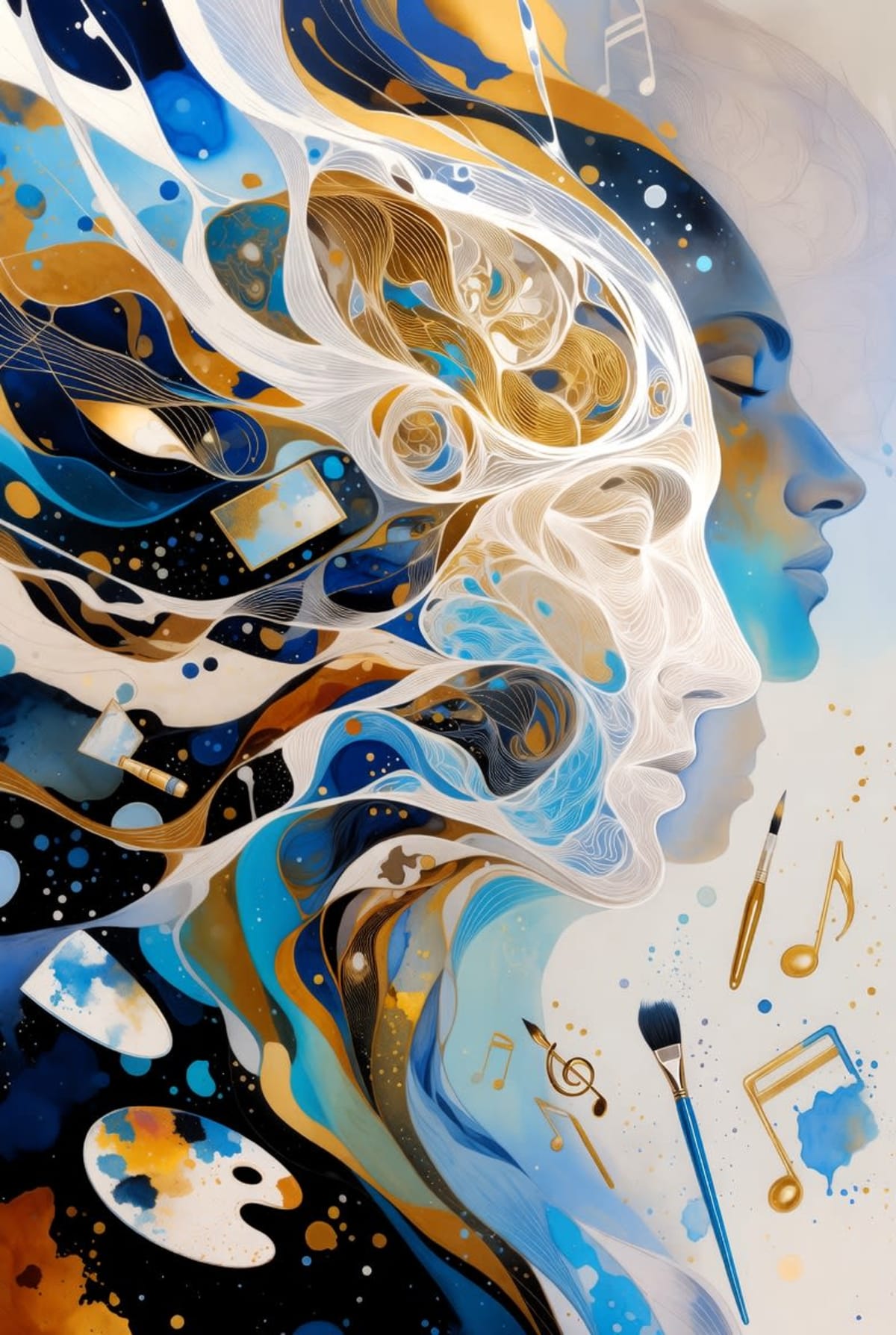
The Role of AI in Art and Creativity: How Artificial Intelligence is Transforming Creative Industries
The intersection of artificial intelligence and creativity has sparked one of the most fascinating debates of our time. As AI systems become increasingly sophisticated, they are not just automating mundane tasks but actively participating in creative processes that were once considered exclusively human domains. From generating stunning visual art to composing symphonies and writing poetry, AI is reshaping how we think about creativity itself.
This transformation raises profound questions: Can machines truly be creative? What happens when algorithms can produce art indistinguishable from human work? And how will creative professionals adapt to a world where AI is both collaborator and competitor? Let's explore how artificial intelligence is revolutionizing the creative landscape across multiple industries.
Understanding AI's Creative Capabilities
Before diving into specific applications, it's essential to understand what AI creativity actually means. Modern AI systems, particularly those using deep learning and neural networks, don't create art the way humans do. Instead, they learn patterns from vast datasets of existing creative work and generate new outputs based on those learned patterns.
Generative AI models like GPT for text, DALL-E and Midjourney for images, and various systems for music have demonstrated remarkable abilities. These tools can produce original content that feels genuinely creative, even though their process differs fundamentally from human imagination. The technology relies on complex mathematical models that identify relationships between concepts, styles, and elements within their training data.
What makes this particularly intriguing is that AI doesn't just replicate what it has seen. Through techniques like latent space exploration and style transfer, these systems can combine ideas in novel ways, creating outputs that surprise even their developers. This capability suggests that while AI creativity may be mechanistic, it can still produce genuinely innovative results.
AI's Impact on Visual Arts and Design
Generative Art and Digital Illustration
The visual arts sector has experienced perhaps the most dramatic transformation. AI image generators have democratized artistic creation, allowing anyone with a text prompt to produce sophisticated imagery. Professional artists now use these tools as part of their creative workflow, generating concept art, exploring visual directions, and even creating finished pieces.
Commercial designers leverage AI to rapidly prototype logos, marketing materials, and product visualizations. What once took days of iteration can now happen in hours, freeing designers to focus on strategic creative decisions rather than execution. The technology has become particularly valuable for industries requiring high volumes of visual content, from e-commerce to social media marketing.
However, this shift has created tensions within creative communities. Many artists feel threatened by AI tools that can replicate artistic styles without permission, raising questions about copyright, attribution, and the value of human skill. The debate continues about whether AI-generated art should be considered authentic creative work or merely sophisticated collage.
Photography and Image Enhancement
AI has revolutionized photography beyond just image creation. Modern cameras and editing software use machine learning for everything from autofocus and exposure to sophisticated editing operations. Neural filters can remove unwanted objects, change lighting conditions, and even alter facial expressions with remarkable realism. These capabilities have made professional-quality photo editing accessible to amateur photographers while giving professionals powerful new tools for realizing their creative vision.
Transforming Music and Audio Production
The music industry has embraced AI across composition, production, and distribution. AI systems can now generate complete musical pieces in various genres, create backing tracks for songwriters, and even produce entire soundtracks for videos and games. Services powered by machine learning algorithms analyze listener preferences to recommend music and help artists understand their audience.
In the studio, AI-powered tools assist with mixing and mastering, tasks that traditionally required years of expertise. These systems can automatically balance levels, apply effects, and optimize tracks for different playback environments. While they don't replace skilled audio engineers, they significantly reduce the technical barriers to producing professional-quality recordings.
Composers are discovering that AI can be a valuable creative partner. Rather than replacing human musicianship, these tools serve as sophisticated instruments that can quickly explore harmonic possibilities, generate variations on themes, and suggest unexpected musical directions. The technology excels at handling the computational aspects of music theory, freeing composers to focus on emotional and artistic expression.
Voice synthesis technology has reached a point where AI can replicate human singing voices with stunning accuracy. This capability opens creative possibilities for artists but also raises ethical concerns about vocal cloning and consent. The industry is grappling with questions about ownership and authenticity as these technologies become more accessible.
AI in Writing and Content Creation
Language models have transformed how we approach writing across virtually every domain. From journalism to marketing, technical documentation to creative fiction, AI writing assistants have become ubiquitous tools. These systems can draft articles, generate product descriptions, write code documentation, and even create poetry and stories.
Content marketers use AI to produce blog posts, social media updates, and email campaigns at scale. The technology analyzes successful content patterns and adapts writing styles to match brand voices and audience preferences. This automation allows marketing teams to maintain consistent content output while focusing human creativity on strategy and high-value creative work.
For professional writers, AI tools serve different purposes. Some authors use them for brainstorming and outlining, generating ideas and plot structures that they then develop with their unique voice. Others employ AI to overcome writer's block or to quickly produce first drafts that they extensively revise. The key insight is that these tools work best as collaborative partners rather than replacements for human creativity.
Academic and technical writing has also benefited from AI assistance. Researchers use language models to help draft papers, summarize literature, and explain complex concepts. However, concerns about originality, accuracy, and proper attribution remain significant, leading academic institutions to develop new policies about AI use in scholarly work.
Revolutionizing Film, Video, and Animation
The moving image industry is experiencing an AI-driven revolution across production, post-production, and distribution. Machine learning algorithms now handle tasks ranging from video editing and color grading to visual effects and animation. These tools can remove unwanted objects from footage, stabilize shaky cameras, and even generate realistic backgrounds and environments.
Animation studios leverage AI to accelerate traditionally labor-intensive processes. Systems can now generate in-between frames, automatically lip-sync dialogue, and create realistic crowd simulations. This technology doesn't eliminate the need for skilled animators but allows them to work more efficiently and tackle more ambitious projects.
Video content creators on platforms like YouTube and TikTok use AI tools to enhance their work. Automated editing can identify the most engaging moments in raw footage, generate subtitles, and optimize content for different platforms. These capabilities have lowered the barriers to creating professional-looking video content, contributing to the explosion of video-based media.
Perhaps most controversially, AI can now generate realistic video from text descriptions or manipulate existing footage to change appearances, expressions, and speech. While this technology enables creative possibilities like de-aging actors or bringing historical figures to life, it also raises serious concerns about deepfakes and misinformation.
Gaming and Interactive Media Innovation
The gaming industry has become a major beneficiary of AI creativity. Procedural content generation powered by machine learning creates vast, unique game worlds with minimal manual design work. AI systems generate terrain, populate environments with assets, and even create quests and narrative elements that adapt to player choices.
Character behavior has evolved dramatically through AI. Non-player characters now exhibit more realistic and varied responses, creating more immersive gaming experiences. Some games experiment with AI-driven dialogue systems that allow players to have natural conversations with virtual characters, moving beyond pre-scripted interactions.
Game development itself has been accelerated by AI tools that assist with asset creation, testing, and balancing. Developers use AI to generate textures, optimize performance, and identify bugs. These efficiencies allow smaller studios to create more ambitious projects and help large studios reduce development costs and timelines.
Fashion and Product Design Evolution
Fashion designers are embracing AI to predict trends, generate new designs, and optimize production. Machine learning algorithms analyze social media, runway shows, and retail data to identify emerging style preferences. This insight helps brands stay ahead of trends and reduce the risk of producing unwanted inventory.
AI design tools can generate thousands of clothing variations, allowing designers to explore possibilities much faster than traditional methods. Some brands use AI to create personalized designs based on individual customer preferences and body measurements, moving toward truly customized fashion at scale.
Product designers across industries use similar approaches. AI helps create ergonomic designs, optimize materials, and predict how products will perform. The technology accelerates the design iteration process and helps companies bring better products to market faster.
Navigating Challenges and Ethical Considerations
Copyright and Ownership Questions
The rise of AI creativity has created complex legal challenges. Who owns AI-generated art? Can copyrighted material used in training data be considered fair use? Current intellectual property law was not designed for machine-created content, and courts worldwide are grappling with these questions. Artists have filed lawsuits against AI companies for training models on their work without permission or compensation.
Job Displacement Concerns
Many creative professionals worry that AI will eliminate their jobs. While some roles may indeed be automated, history suggests technology typically transforms rather than eliminates creative work. The demand for human creativity, strategic thinking, and emotional intelligence remains strong. However, the creative workforce will need to adapt, learning to work alongside AI tools and focusing on uniquely human strengths.
Quality and Authenticity
As AI-generated content floods the internet, distinguishing between human and machine creation becomes increasingly difficult. This raises questions about authenticity and value. Will audiences care whether art was created by humans or machines? How do we maintain standards of quality when anyone can generate thousands of images or articles instantly? These questions challenge our traditional understanding of creative merit.
Bias and Representation
AI systems learn from existing data, which means they can perpetuate and amplify biases present in their training material. This concern is particularly acute in creative applications where representation matters. AI models have been criticized for generating stereotypical images, underrepresenting certain groups, or making problematic assumptions. Addressing these issues requires conscious effort to diversify training data and implement fairness measures.
READ : How Artificial Intelligence Is Shaping Fairness, Trust, and Decision-Making
The Future of AI and Human Creativity
Looking ahead, the relationship between AI and creativity will likely become more sophisticated and nuanced. Rather than replacing human creators, AI seems poised to become an increasingly powerful tool that enhances human creativity. The most successful creative professionals will be those who learn to effectively collaborate with AI, using it to amplify their vision rather than viewing it as a threat.
We may see the emergence of new creative roles focused on AI collaboration. Prompt engineering, AI art direction, and human-AI creative direction could become recognized specializations. These roles will require understanding both the technical capabilities of AI systems and the artistic principles that make creative work compelling.
The democratization of creative tools through AI could lead to an explosion of diverse voices and perspectives in creative industries. People who lacked traditional artistic training or access to expensive tools can now participate in creative expression. This could enrich our cultural landscape with new stories, aesthetics, and ideas.
However, this future depends on how we address current challenges. Establishing fair compensation models, protecting creative rights, and ensuring AI systems are developed responsibly will be crucial. The creative industries must actively shape how AI is integrated rather than simply reacting to technological change.
Strategies for Thriving in the AI Creative Era
For Creative Professionals
Creative professionals should view AI as a tool to enhance rather than replace their skills. Learning to use AI effectively while maintaining your unique creative voice will be essential. Focus on developing skills that AI cannot easily replicate: conceptual thinking, emotional intelligence, cultural understanding, and the ability to connect disparate ideas in meaningful ways.
Stay informed about AI developments in your field. Experiment with available tools to understand their capabilities and limitations. This knowledge will help you identify opportunities where AI can accelerate your work and situations where human creativity remains irreplaceable.
For Organizations and Businesses
Companies should approach AI integration thoughtfully, viewing it as an opportunity to augment human creativity rather than simply cut costs. Invest in training your creative teams to use AI tools effectively. Create frameworks that combine AI efficiency with human oversight and creative judgment.
Consider the ethical implications of AI use in your creative processes. Develop clear policies about attribution, compensation, and rights management. Being transparent about AI use can build trust with your audience and differentiate your brand in an increasingly automated landscape.
For Aspiring Creatives
If you are entering creative fields, embrace AI as part of your toolkit from the beginning. Learn both traditional creative skills and how to effectively collaborate with AI systems. This dual competency will position you well in the evolving creative landscape. Focus on developing your unique perspective and voice, which AI cannot replicate, while leveraging technology to execute your vision more effectively.
Conclusion: Embracing the Creative Partnership
The integration of AI into creative industries represents neither a utopian revolution nor a dystopian takeover. Instead, it marks a significant evolution in how we create, distribute, and consume creative work. AI offers powerful new capabilities that can enhance human creativity, but it also presents challenges that require thoughtful navigation.
The most compelling creative work will likely continue to come from the intersection of human imagination and technological capability. AI excels at processing patterns, generating variations, and executing technical tasks, but humans bring context, emotion, cultural understanding, and the spark of genuine inspiration. Together, these complementary strengths can produce results neither could achieve alone.
As we move forward, the creative industries must actively shape how AI is integrated rather than passively accepting whatever technology delivers. This means advocating for fair policies, developing ethical guidelines, and maintaining focus on what truly matters: creating meaningful work that connects with audiences and enriches our cultural landscape.
The question is not whether AI will change creativity but how we will adapt to work alongside it. Those who embrace this partnership thoughtfully, maintaining their creative integrity while leveraging new capabilities, will thrive in this evolving landscape. The future of creativity lies not in humans versus machines but in humans and machines working together to expand the boundaries of what is possible.
The transformation is already underway. The creative professionals, organizations, and aspiring artists who succeed will be those who approach this moment with both openness to possibility and commitment to the enduring values of genuine creative expression. In this new era, creativity remains fundamentally human, even as the tools we use to express it become increasingly sophisticated.
Also Read: Best Practices for AI-Driven Content Optimization: A Step-by-Step Guide.