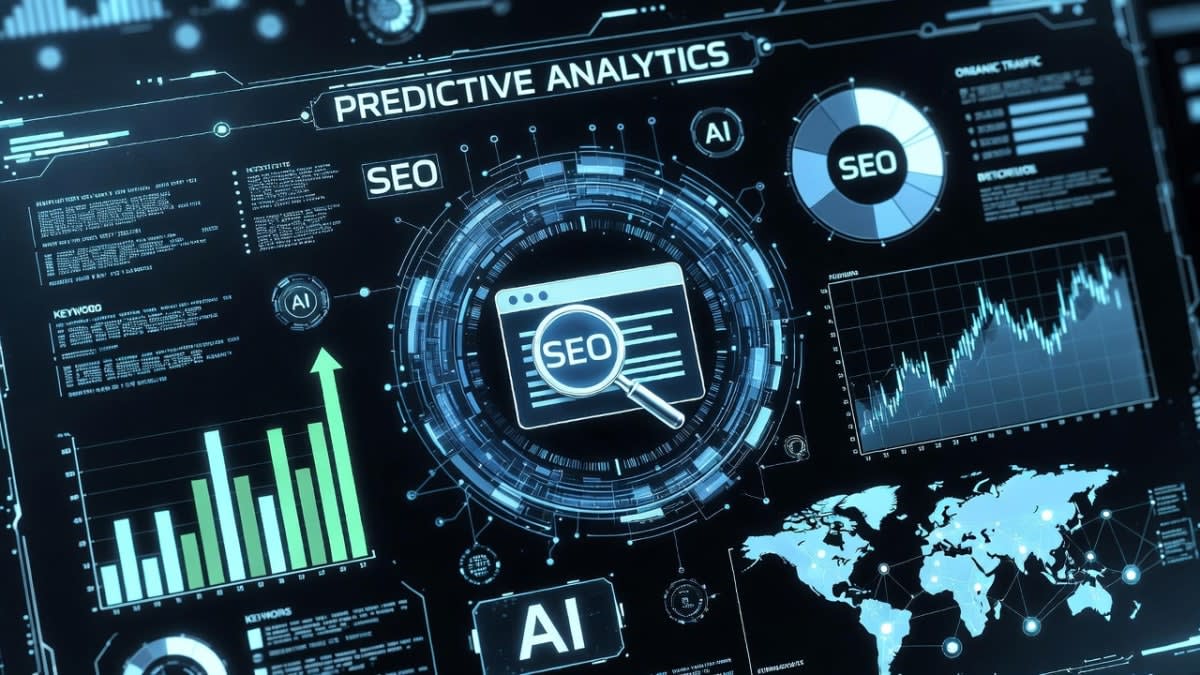
How AI Predictive Analytics Enhances SEO Performance
In today's digital landscape, where search engines process billions of queries daily, achieving strong SEO performance requires more than traditional tactics. Businesses must anticipate shifts in user behavior, algorithm updates, and market trends to maintain visibility and drive organic traffic. This is where AI predictive analytics emerges as a transformative force. By leveraging historical data, machine learning algorithms, and real-time insights, predictive analytics enables marketers to forecast outcomes and optimize strategies proactively. For marketing agencies and enterprises alike, this approach not only boosts rankings but also aligns content with evolving audience needs, ultimately improving conversion rates and ROI.
This article explores the mechanisms through which AI predictive analytics elevates SEO performance, drawing on practical applications, benefits, and forward-looking strategies. Whether you're a digital marketer refining campaigns or a business leader seeking sustainable growth, understanding these dynamics can provide a competitive edge.
Understanding AI Predictive Analytics
AI predictive analytics involves using algorithms to analyze vast datasets and predict future events based on patterns and correlations. Unlike descriptive analytics, which reviews past performance, or diagnostic analytics, which explains why something happened, predictive models forecast what might occur next. In the context of marketing, these models process variables such as search query volumes, user engagement metrics, and external factors like economic shifts or seasonal events.
Core components include machine learning techniques, such as regression analysis, neural networks, and natural language processing (NLP). For instance, tools powered by these technologies can sift through terabytes of search data to identify emerging trends. According to industry insights, predictive analytics can interpret historical search patterns and external influences to anticipate keyword demand fluctuations. This capability is particularly valuable in SEO, where timing and relevance determine success.
The Fundamentals of SEO Performance
SEO performance encompasses a site's ability to rank highly in search engine results pages (SERPs), attract qualified traffic, and convert visitors into customers. Key metrics include organic traffic volume, keyword rankings, click-through rates (CTR), bounce rates, and domain authority. Traditional SEO relies on keyword research, on-page optimization, backlink building, and content creation. However, these methods are often reactive, responding to changes after they've impacted rankings.
In a B2B marketing environment, where decision cycles are longer and buyer journeys more complex, SEO must deliver targeted value. Agencies specializing in B2B strategies, such as those focusing on lead generation and sales enablement, emphasize data-driven approaches to ensure content resonates with professional audiences. Here, predictive analytics bridges the gap between reactive optimization and strategic foresight, allowing for more precise resource allocation.
Integrating AI Predictive Analytics into SEO Strategies
The integration of AI predictive analytics into SEO transforms it from an art into a science. Below, we delve into specific applications that directly enhance performance.
Forecasting Keyword Trends
One of the primary ways predictive analytics aids SEO is by predicting keyword popularity. AI algorithms analyze historical search volumes, competitor activities, and global events to forecast which terms will gain traction. For example, in industries like e-commerce or finance, seasonal keywords such as "holiday investment strategies" can be anticipated months in advance, enabling content creation before demand peaks.
Tools utilizing machine learning can predict trends with high accuracy, helping businesses adjust bidding strategies in paid search or optimize organic content. This proactive stance reduces the risk of missing opportunities and ensures content ranks when searches surge, leading to sustained traffic growth.
Optimizing Content for User Intent
Content remains king in SEO, but predictive analytics elevates it by aligning with anticipated user intent. By examining user behavior data such as dwell time, scroll depth, and query refinements making AI models predict what information users will seek next. NLP techniques further dissect search queries to understand context, enabling the creation of content that addresses implicit needs.
For instance, if analytics forecast a rise in queries about "sustainable supply chain management" in B2B sectors, marketers can develop in-depth guides or case studies ahead of time. This not only improves relevance scores in search algorithms but also enhances user satisfaction, reducing bounce rates and boosting engagement signals that influence rankings.
Read: AI Driven Content Optimization Guide
Predicting User Behavior and Personalization
Predictive models excel at forecasting individual user actions based on aggregated data. In SEO, this translates to personalized experiences that improve retention and conversions. AI can segment audiences by predicting behaviors like cart abandonment or content preferences, allowing for tailored on-site recommendations or dynamic content adjustments.
In a broader sense, these insights inform site architecture and internal linking strategies, ensuring users find value quickly. Studies show that personalized SEO approaches, driven by predictive analytics, can increase engagement by up to 20%, directly impacting performance metrics.
Competitor Analysis and Benchmarking
AI tools scan competitor websites, backlink profiles, and content performance to predict their future moves. By identifying patterns in their SEO tactics, businesses can anticipate competitive threats and opportunities. For example, if a rival is ramping up content around emerging topics, predictive analytics can signal the need for counter-strategies.
This level of insight allows for benchmarking against industry standards, refining tactics to outperform peers. In B2B marketing, where market share is fiercely contested, such foresight can mean the difference between leading or lagging in SERPs.
Anticipating Algorithm Updates
Search engines like Google frequently update algorithms, often catching sites off guard. Predictive analytics uses historical update data and machine learning to forecast potential changes. By analyzing factors like core web vitals, E-A-T (Expertise, Authoritativeness, Trustworthiness), and mobile usability, AI can recommend preemptive optimizations.
This forward-thinking approach minimizes ranking drops and accelerates recovery, maintaining consistent SEO performance.
Measurable Benefits to SEO Performance
The adoption of AI predictive analytics yields tangible benefits across SEO metrics. First, it enhances efficiency by automating data-heavy tasks, freeing marketers to focus on creative strategy. Traffic forecasts enable better budgeting, with some reports indicating up to 30% improvements in ROI through targeted optimizations.
Second, it fosters resilience against volatility. Businesses using predictive models report faster adaptation to trends, resulting in higher average rankings and sustained organic growth. In terms of user experience, personalized predictions lead to lower bounce rates and higher CTRs, reinforcing positive feedback loops with search engines.
Finally, in a B2B context, where leads are high-value, predictive SEO aligns marketing efforts with sales pipelines, improving lead quality and conversion rates.
Real-World Examples and Case Studies
Consider a mid-sized B2B software firm that implemented AI predictive analytics for its SEO. By forecasting a surge in searches for "cloud security solutions" amid rising cyber threats, the company produced authoritative content six months prior. This led to a 45% increase in organic traffic and a 25% uplift in qualified leads.
Another example involves an e-commerce retailer using predictive tools to anticipate seasonal trends. AI models predicted a shift toward "eco-friendly packaging" queries, prompting optimized product pages and blog posts. The result? A 35% boost in rankings for related terms and improved sales during peak periods.
These cases illustrate how predictive analytics turns data into actionable intelligence, driving measurable SEO success.
Challenges and Best Practices
Despite its advantages, implementing AI predictive analytics isn't without hurdles. Data quality is paramount; inaccurate inputs lead to flawed predictions. Privacy regulations like GDPR also require careful handling of user data. Additionally, over-reliance on AI can stifle creativity, so a balanced approach is essential.
Best practices include starting with clean, integrated datasets from tools like Google Analytics and SEMrush. Collaborate with cross-functional teams to interpret predictions accurately. Regularly validate models against actual outcomes to refine accuracy. For agencies, partnering with specialized firms can accelerate adoption without steep learning curves.
Future Trends in AI Predictive Analytics for SEO
Looking ahead, advancements in AI will deepen its SEO impact. Quantum computing could process even larger datasets for hyper-accurate forecasts. Integration with voice search and augmented reality will expand predictive capabilities, anticipating multimodal queries.
Moreover, ethical AI practices will gain prominence, ensuring transparency and bias mitigation. As search engines evolve, predictive analytics will become indispensable for maintaining relevance in an increasingly intelligent digital ecosystem.
Conclusion
AI predictive analytics represents a paradigm shift in SEO, empowering businesses to move from reaction to anticipation. By forecasting trends, optimizing content, and personalizing experiences, it directly enhances performance metrics and drives long-term growth. For marketing professionals, embracing these tools is not optional but essential in a competitive arena.
To harness this potential, begin with a thorough audit of your current SEO setup and explore AI platforms tailored to your needs. The result? A robust, future-proof strategy that delivers consistent value to your audience and bottom line.
Also Read: How Technology Is Reshaping Our Lifestyle.