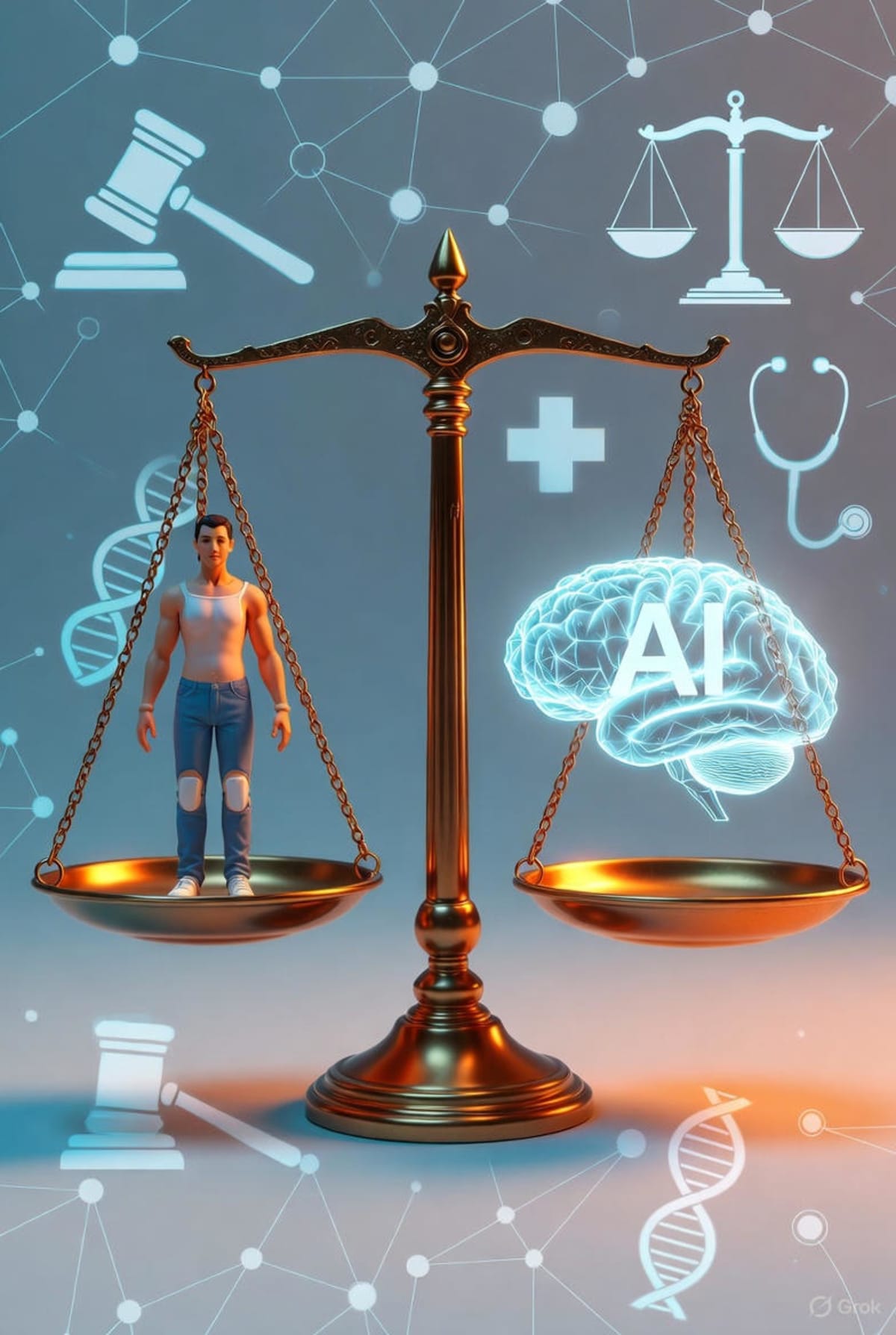
Introduction: Why AI Ethics Matters Today
Artificial Intelligence is no longer a futuristic concept it is actively shaping decisions that influence who gets hired, approved for loans, diagnosed for illnesses, or even flagged by security systems. These systems operate at scale and speed, often beyond direct human oversight.
While AI can improve efficiency and reduce human error, it also introduces ethical concerns. If not carefully designed and monitored, AI decision-making systems can amplify bias, lack accountability, and reduce human agency. Understanding AI ethics is no longer optional it is essential.
How AI Is Used in Decision-Making
AI decision-making refers to systems that analyze data and produce outcomes or recommendations without direct human judgment at every step.
Common examples include:
- Resume screening in recruitmentCredit scoring and loan approvals
- Medical diagnosis support systems
- Facial recognition for security
- Content moderation on social platforms
These systems rely heavily on historical data, algorithms, and predefined objectives factors that can introduce ethical risks.
Bias and Fairness in AI Systems
One of the most widely discussed ethical challenges in AI is bias.
AI systems learn from data. If the data reflects historical inequalities or discrimination, the AI can unintentionally reproduce or even worsen those patterns.
Real-World Example:
Several hiring algorithms have been found to favor male candidates because they were trained on past hiring data dominated by men. Although the system did not explicitly consider gender, biased data influenced its decisions.
Why This Is a Problem
- Unfair exclusion of qualified candidates
- Reinforcement of social inequalities
- Loss of trust in automated systems
Ethical AI requires diverse, representative data and continuous evaluation to reduce bias.
Transparency and Explainability
Many AI systems operate as “black boxes,” meaning their internal decision processes are difficult to understand even for their creators.This lack of transparency becomes a serious ethical issue when AI decisions affect human rights or livelihoods.
Key Ethical Questions
- Why was this decision made?
- Can the decision be challenged?
- Who is responsible if the decision is wrong?
In areas like healthcare and finance, explainable AI is critical so humans can understand, validate, and correct AI-driven outcomes.
Accountability: Who Is Responsible for AI Decisions?
When AI systems make mistakes, accountability becomes unclear.
Is it:
- The developer who wrote the code?
- The company that deployed the system?
- The organization that relied on the AI output?
Without clear accountability, harmful decisions may go unaddressed. Ethical frameworks increasingly emphasize human oversight, ensuring that final responsibility remains with people, not machines.
Privacy and Data Protection
AI decision-making often relies on vast amounts of personal data.
Ethical concerns arise when:
- Data is collected without informed consent.
- Sensitive information is misused.
- Surveillance systems invade personal privacy.
For example, facial recognition technology has raised global concerns due to its use in mass surveillance and its potential misuse by both governments and private organizations. Strong data protection policies and responsible data handling are central to ethical AI.
Human Oversight vs Full Automation
While automation improves efficiency, removing humans entirely from decision loops can be dangerous.
Ethical AI promotes a human-in-the-loop approach:
- AI assists, but humans decide.
- AI flags patterns, humans interpret context.
- AI recommends, humans validate.
This balance helps prevent blind trust in algorithms and ensures moral judgment remains part of critical decisions.
Ethical AI in Practice: Positive Examples
Despite challenges, many organizations are working toward ethical AI.
Examples include:
- AI tools in healthcare that assist doctors rather than replace them.
- Transparent credit scoring models that allow users to understand decisions.
- AI guidelines published by global organizations to promote fairness and accountability.
These efforts show that ethical AI is achievable when responsibility is prioritized.
The Future of Ethical AI
As AI becomes more integrated into daily life, ethical considerations will continue to shape laws, policies, and innovation.
Key future focus areas include:
- Stronger AI governance frameworks.
- International ethical standards.
- Better public understanding of AI systems.
- Continuous monitoring and auditing of AI decisions.
Ethical AI is not about slowing innovation it is about ensuring technology serves humanity responsibly.
Conclusion
Artificial Intelligence has immense potential to improve decision-making, but without ethical safeguards, it can also cause real harm. Issues such as bias, transparency, accountability, and privacy must be addressed intentionally. By combining technological innovation with ethical responsibility, society can build AI systems that are not only intelligent, but also fair, trustworthy, and human-centered.