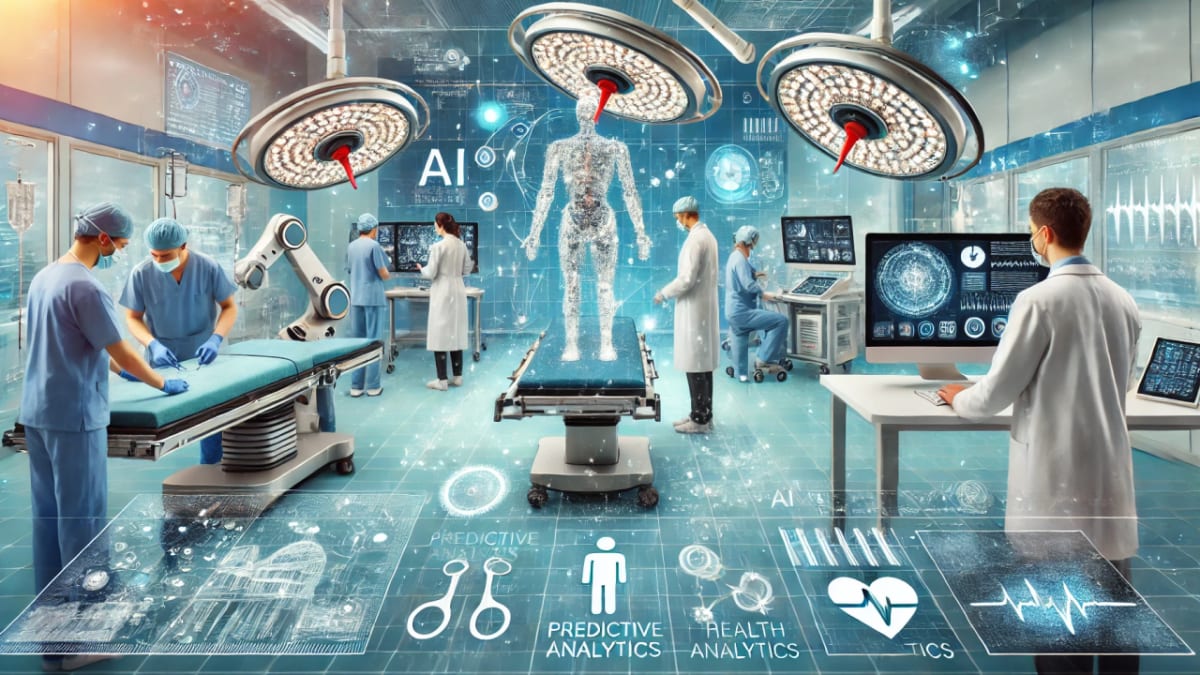
Artificial Intelligence in Medicine: How AI is Changing Diagnostics and Treatment
Artificial intelligence (AI) has emerged as a transformative force in the medical field, reshaping the ways clinicians approach diagnostics and treatment. By leveraging machine learning algorithms, neural networks, and vast datasets, AI systems analyze complex medical information with speed and precision that often surpass human capabilities. This evolution promises to enhance patient outcomes, reduce healthcare costs, and streamline clinical workflows. As of 2026, the global AI in healthcare market is valued at approximately 56 billion United States dollars, with projections indicating growth to over 1 trillion dollars by 2034, reflecting a compound annual growth rate of around 50 percent. This expansion is driven by advancements in data processing, regulatory approvals, and the integration of AI into clinical practice. For medical experts, students, and researchers, understanding these developments is essential to navigating the evolving landscape of medicine. This article explores the impact of AI on diagnostics and treatment, supported by verifiable examples and statistics, while addressing challenges and future directions.
AI in Diagnostics: Enhancing Accuracy and Efficiency
Diagnostics represent a cornerstone of medical practice, where timely and accurate identification of conditions can significantly influence patient prognosis. AI has revolutionized this domain by augmenting human expertise, particularly in areas requiring pattern recognition and data interpretation. In medical imaging, for instance, AI algorithms process radiographs, magnetic resonance imaging scans, and computed tomography images to detect anomalies with high sensitivity.
One prominent application is in radiology, where AI tools assist in identifying lung cancer, fractures, and other pathologies. By mid-2025, the United States Food and Drug Administration had approved 1,247 medical devices incorporating AI and machine learning, with 956 of these focused on radiology. These devices employ convolutional neural networks to highlight potential abnormalities, reducing diagnostic errors. A study published in the Journal of the American Medical Association highlighted how AI has transformed medical imaging by augmenting interpretation, leading to improved efficiency for radiologists and pathologists. For example, Google's AI system for detecting lung cancer has demonstrated superior performance compared to human radiologists in certain datasets, identifying malignancies earlier and potentially improving survival rates.
Beyond imaging, AI excels in predictive analytics for disease detection. Systems analyze electronic health records, genetic data, and biomarkers to forecast conditions such as diabetes or cardiovascular events. In oncology, AI models evaluate patient genomics and history to recommend therapies, with applications in neurology also prominent. Statistics indicate that AI could reduce annual United States healthcare costs by 150 billion dollars in 2026 through enhanced diagnostics, particularly in oncology and neurology, which are expected to lead the market. Hospitals utilizing AI have reported improvements in throughput and reduced readmissions, with diagnostic accuracy optimized across specialties like pathology and chronic disease management.
In pathology, AI-driven tools analyze tissue samples to identify cancerous cells more rapidly than traditional methods. This not only accelerates turnaround times but also minimizes variability among pathologists. Research from ScienceDirect emphasizes that AI in diagnostics improves accuracy and productivity, ultimately contributing to better patient outcomes and cost reductions. For researchers and students, these advancements underscore the importance of integrating AI literacy into medical curricula, as they enable earlier interventions and more precise care pathways.
AI in Treatment: Personalizing Care and Accelerating Innovation While diagnostics focus on identification, treatment involves tailoring interventions to individual patients. AI is pivotal here, enabling personalized medicine, optimizing drug discovery, and enhancing procedural outcomes. In personalized treatment, AI algorithms process patient data including genetics, lifestyle, and medical history to recommend customized therapies.
For instance, AI-powered tools predict patient responses to medications, minimizing adverse effects and trial-and-error prescribing. In precision medicine, AI tailors approaches to individual profiles, predicting risks like Alzheimer's or cardiovascular disease based on environmental and genetic factors. This has been evident in clinical trials, where AI analyzes data to identify optimal candidates and therapies, potentially shortening development timelines.
Drug discovery represents another frontier where AI accelerates processes traditionally spanning years. Generative AI models simulate molecular interactions to design new compounds, with breakthroughs in 2025 including AI-assisted drug development. Forbes reports that generative AI in drug discovery is a key trend, expediting the identification of novel treatments for conditions like autism and cancer. By 2026, AI is expected to dominate this space, reducing costs and time to market.
In surgical applications, AI integrates with robotics to enhance precision. Systems like those in AI-assisted robotic surgery guide procedures, with the market for such technologies projected to reach 40 billion dollars by 2026. Examples include AI in telemedicine and virtual assistants, which support remote monitoring and treatment planning. For medical experts, these tools augment decision-making, as seen in ambient documentation systems that automate note-taking, freeing clinicians for patient interaction. Overall, AI in treatment fosters a shift toward proactive, patient-centered care, with verifiable impacts on efficacy and resource allocation.
Challenges and Ethical Considerations in AI Adoption
Despite its promise, AI in medicine faces significant challenges that must be addressed to ensure equitable and safe implementation. Ethical concerns include bias in algorithms, which can perpetuate health disparities if trained on unrepresentative datasets. For example, biases may lead to inaccurate results for underrepresented groups, exacerbating inequalities.Privacy and data security are paramount, as AI relies on sensitive patient information. Issues of informed consent and data ownership arise, with risks of breaches undermining trust. Additionally, overreliance on AI could diminish clinicians' critical thinking skills, leading to "alert fatigue" from excessive notifications. Liability questions persist: who is accountable when AI errs?
Regulatory frameworks are evolving, with the European Union's AI Act set to influence global standards by August 2026. Frameworks emphasizing transparency, accountability, and fairness are proposed to mitigate these risks. For researchers, addressing these challenges requires multidisciplinary collaboration to develop robust, ethical AI systems.
Also Read :The Ethics of Artificial Intelligence
Future Prospects: Toward an AI-Integrated Healthcare Ecosystem
Looking ahead, AI's role in healthcare is poised for exponential growth. Agentic AI, which autonomously performs tasks, will transform workflows, from predictive prevention to clinical automation. Trends include AI copilots for clinical decisions and expanded remote monitoring. In diagnostics, portable AI devices will enable point-of-care testing, while in treatment, fully autonomous robotic systems may become standard.Projections suggest AI will enhance disease detection, though it may strain system capacity due to increased follow-ups. Ethical integration remains key, with calls for codes of conduct to guide development. For students and experts, the future demands proficiency in AI tools alongside traditional medical knowledge, fostering innovations that prioritize patient welfare.
Conclusion
Artificial intelligence is fundamentally altering diagnostics and treatment in medicine, offering unprecedented accuracy, personalization, and efficiency. From AI-enhanced imaging that detects diseases earlier to predictive models that tailor therapies, the benefits are substantial and supported by growing market adoption. However, realizing this potential requires vigilant attention to ethical, regulatory, and practical challenges. As the field advances into 2026 and beyond, collaboration among clinicians, researchers, and policymakers will be crucial to harness AI's power responsibly. Ultimately, AI serves as a tool to augment human expertise, paving the way for a more effective and equitable healthcare system.
Also Read: Analysis of Collusion Risks in Multi-Agent Systems.